Platform rules are a cost
Marketplace sellers need to price for fulfilment, advertising, returns, storage and policy changes rather than treating online reach as free demand.
Source: Amazon Seller Central
Business guides
A Phoenix Amazon store works best when the founder treats the Valley as an operations base, not as a passive side hustle. Test storage, heat exposure, packing workflow, supplier reliability and advertising dependence before assuming marketplace reach equals viable profit.
Overview
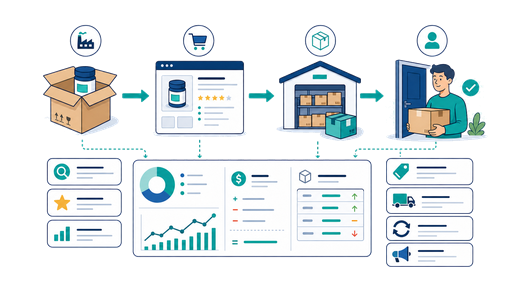
Phoenix gives online sellers access to affordable flex space, strong freeway connections and a large metro labour pool, but desert heat and suburban sprawl still shape daily operations. A home setup in Chandler, a garage in Mesa or a small west-side warehouse all create different storage, dispatch and return-handling realities. Use the simulator to test landed cost, fulfilment time, packaging and advertising separately so growth does not hide weak order economics.
Key stats
Platform rules are a cost
Marketplace sellers need to price for fulfilment, advertising, returns, storage and policy changes rather than treating online reach as free demand.
Source: Amazon Seller Central
Cash flow comes first
E-commerce can grow sales while consuming cash through inventory buys, ad spend and delayed payouts.
Source: SBA
Consumer law still applies
Online sellers still need clear claims, returns handling and truthful pricing.
Source: ACCC
Key concepts
Heat-sensitive cosmetics, food, batteries and adhesives need a stricter feasibility test than durable packaged goods. Phoenix can be a practical fulfilment base, but only if storage conditions and dispatch speed protect the product you sell.
Keep the launch range narrow. A small catalogue with clear search intent and manageable return risk is easier to model than a broad assortment bought on enthusiasm.
Marketplace dashboards can make fulfilment look automatic, but someone still receives stock, checks quality, prints labels, answers messages and processes returns. In a spread-out city, even a short courier run or storage trip can quietly consume time.
Stay lean until reorder patterns and support volume are proven. Phoenix has room for home-based and small-warehouse setups, so use that flexibility to protect cash rather than overbuilding early.
Audience and industry
Customers for a Amazon online store in Phoenix should be described by routine, not by broad demographics. Identify who buys, when they buy, how often they return, what alternatives they compare, and how far they will travel. For this business, the first demand hypothesis to prove is search demand, product-market fit and review trust.
Amazon selling suits Phoenix founders who want scale without a storefront, especially in a fast-growing Sun Belt metro where storage is more attainable than on the coast. The model is strongest when product selection, replenishment discipline and fulfilment systems are clearer than the branding hype.
Competition in Phoenix is not just the nearest similar operator. Include substitutes, online options, supermarkets, gyms, marketplaces, delivery platforms, shopping centres, petrol sites, home alternatives and any business that solves the same customer problem. Visit competitors at the same times you expect to trade.
Key factors
Proof of search demand, product-market fit and review trust in the exact Phoenix catchment.
Rent, outgoings, lease obligations and fit-out spend compared with conservative sales.
catalogue quality, fulfilment choice, customer service and stock discipline
gross margin after fees, ads, returns and stock-outs
Enough cash to survive delays, learning, seasonality and slower repeat-customer growth.
Finance model
Business Model Canvas
Specific Phoenix customers with repeat need for search demand, product-market fit and review trust.
A Amazon store offer that is easier, faster, more trusted or more local than the alternatives.
Street visibility, local search, referrals, social proof, partnerships, delivery or marketplace channels as appropriate.
Sales driven by search demand, product-market fit and review trust; test price, volume and repeat rate separately.
referral fees, fulfilment fees, advertising, returns and landed product cost; split fixed costs, variable costs and launch costs.
catalogue quality, fulfilment choice, customer service and stock discipline
A suitable site or channel, trained people, reliable suppliers, systems, permits and enough runway.
Landlord, suppliers, advisers, local marketers, delivery or fulfilment providers, and maintenance support.
Evidence-based assumptions, staged spending, conservative break-even checks and clear exit conditions.
Common mistakes
Treating revenue as proof of viability
Review contribution per order after fees, freight, packaging, advertising, returns and labour before expanding.
Ignoring Phoenix storage conditions
Stress-test inventory for heat, dust and overflow before buying stock that needs more protection or climate control.
Launching too many products at once
Use a focused test range and reorder only when sell-through and cash conversion support it.
Case studies
A compact scenario showing how one assumption can change the result.
A compact scenario showing how one assumption can change the result.
Decision tree
Move to rent, capacity and margin stress tests.
Keep researching, pre-selling or testing with a smaller commitment.
Review startup risk, funding and compliance with advisers.
Renegotiate rent, reduce scope, change location or pause.
Prepare a launch plan with measured weekly review points.
Fix capacity, staffing, supplier or process constraints before spending more.
Self-evaluation
Early stage: tighten the assumptions before treating this as feasible.
Decision point
Use the simulator as a structured sanity check. It should support adviser conversations, not replace them.
Test your idea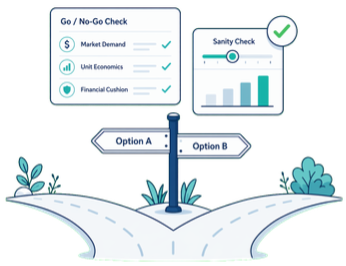
Where you trade
The guide above works as a planning framework. Confirm the rules, taxes and local context below before you commit.

Checklist
FAQ
Often yes, if zoning, storage, safety and carrier access make sense. The model should still include space, packing time, return handling and summer heat protection.
Look for products with clear search demand, reliable suppliers, manageable freight and storage requirements that fit your local setup. Use quotes and fulfilment workflow, not trend excitement, to decide.
Not automatically. Phoenix offers relatively workable flex space, but many founders should first prove stock turn and dispatch rhythm from a smaller base before adding fixed occupancy cost.
No. It is early planning support to help you structure assumptions before seeking qualified advice on finance, tax, lease, employment and compliance matters.
Sources
Disclaimer: smallbizsim.com provides indicative planning estimates only. It is not financial, legal, tax or investment advice. Verify assumptions with qualified advisers before making decisions.