Utilities can decide the model
Equipment-heavy businesses should stress-test power, water, repairs and downtime before trusting revenue projections.
Source: SBA
Business guides
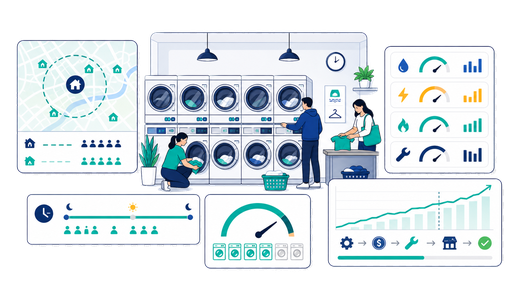
A laundromat can look passive from the footpath. In reality it is a utilities, maintenance and catchment business where machines must earn back capital one cycle at a time.
Localise this guide
Overview
The model works when the catchment has repeat laundry need and the machines, utilities and rent leave enough margin after downtime. In practical terms, this is the laundromat investment story about dense rental housing, limited in-home laundry, visible competitor usage and demand for convenience services, machine turns per day, pricing by load size, utility efficiency, wash-and-fold labour and maintenance uptime, and the discipline to avoid assuming automation removes operating risk while underfunding repairs, utility upgrades and slow early months.
Key stats
Utilities can decide the model
Equipment-heavy businesses should stress-test power, water, repairs and downtime before trusting revenue projections.
Source: SBA
Capital is locked in early
Fit-out, machinery, lease works and maintenance reserves make staged spending more important than a glossy launch.
Source: business.gov.au
Location still matters
Even semi-automated operations need the right catchment, access, parking and visibility.
Source: SCORE
Key concepts
Model washer and dryer turns separately because bottlenecks shift by weather, household size and day of week.
Utility efficiency, water pressure and downtime can move profit more than a small price change.
Add wash-and-fold only if the labour and pickup process are modelled honestly.
Look for renters, apartments, students, older housing stock and limited parking at competitors.
A cheaper site with weak catchment can be more dangerous than an expensive site with proven repeat usage.
Safety, lighting and cleanliness are part of demand, not decoration.
Audience and industry
This guide is for founders, buyers and side-hustle operators asking whether the laundromat deserves more time, money and professional due diligence.
Laundry is a recurring need, but the best sites are won through catchment math, not passive-income mythology.
Visit competitors during weekend peaks and weekday evenings. Count machine usage, parking friction, cleanliness, pricing and whether customers seem underserved.
Key factors
dense rental housing, limited in-home laundry, visible competitor usage and demand for convenience services
machine turns per day, pricing by load size, utility efficiency, wash-and-fold labour and maintenance uptime
washer/dryer mix, utility connections, peak weekend congestion and repair response time
assuming automation removes operating risk while underfunding repairs, utility upgrades and slow early months
a clean, safe, cashless store with reliable machines and optional service revenue such as wash-and-fold
Finance model
Business Model Canvas
renters, apartment residents, students, busy families and customers needing bulky-item washing or wash-and-fold
a clean, safe, cashless store with reliable machines and optional service revenue such as wash-and-fold
Volume multiplied by realised price, with add-ons and repeat frequency tested separately.
Direct costs first, then rent, wages, utilities, software, maintenance, marketing and startup capital.
Conservative assumptions, staged spending, local quotes and clear break-even checks before commitment.
Common mistakes
Mistaking opening-week attention for repeat demand.
Separate curiosity traffic from customers who return at sustainable prices.
Letting the lease decide the business model.
Model rent and fixed costs against a conservative demand case before signing.
Ignoring the operating bottleneck.
Check washer/dryer mix, utility connections, peak weekend congestion and repair response time before assuming more sales are physically possible.
Underfunding the ramp-up period.
Keep working capital for delays, training, mistakes, repairs and slower-than-planned demand.
Case studies
A compact scenario showing how one assumption can change the result.
A compact scenario showing how one assumption can change the result.
Decision tree
Move to quote-based costing and capacity stress tests.
Pause spending and collect better local evidence first.
Test whether the upside case is operationally deliverable.
Reduce fixed costs, narrow the offer or find a different site.
Turn that promise into menu, pricing, staffing and marketing decisions.
Sharpen the concept before committing capital.
Self-evaluation
Early stage: tighten the assumptions before treating this as feasible.
Decision point
Use the simulator as a structured sanity check. It should support adviser conversations, not replace them.
Test your idea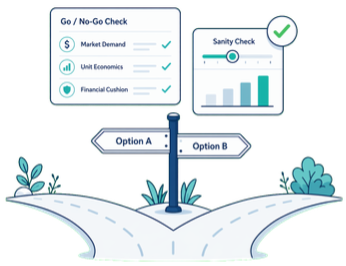
Where you trade
The guide above works as a general planning framework. Pick your country for rules, taxes and local context.

Checklist
FAQ
The main drivers are machine use, vend prices, rent, utilities, maintenance, finance repayments and upfront equipment or fit-out cost.
Yes. Washer and dryer counts, prices and cycles can differ, so the free simulation separates those assumptions.
Yes. Replace the startup cost and sales assumptions with the seller information and test whether the payback still looks reasonable.
No. Payback estimates how long it may take to recover startup money; return compares profit against money invested over time.
No. It is an early planning tool to help you ask better questions before speaking with an accountant, broker or qualified adviser.
Use the optional independent-versus-franchise comparison with the terms from the disclosure document and agreement. Treat the initial fee as startup capital; enter the royalty and brand fund as percentages of modeled gross revenue; and enter required local marketing as a monthly fixed cost in addition to your existing local marketing budget. Confirm the eligible gross-revenue definition, supplier restrictions, territory, renewal, transfer and exit conditions before relying on the comparison.
Sources
Disclaimer: smallbizsim.com provides indicative planning estimates only. It is not financial, legal, tax or investment advice. Verify assumptions with qualified advisers before making decisions.