Platform rules are a cost
Marketplace sellers need to price for fulfilment, advertising, returns, storage and policy changes rather than treating online reach as free demand.
Source: Amazon Seller Central
Business guides
Philadelphia can be a practical base for an Amazon business when the operator treats it as a sourcing, storage and dispatch system rather than an online side project. Use the simulator to test product margin, stock depth, returns and owner workload before adding more SKUs.
Overview
An Amazon store in Philadelphia works best when the city is used as an efficiency base: relatively cheaper space than New York, strong Northeast customer access and enough flexibility to start lean. The real question is whether landed margin still works after supplier pricing, inbound freight, storage, prep, advertising, returns and local labor assumptions are added.
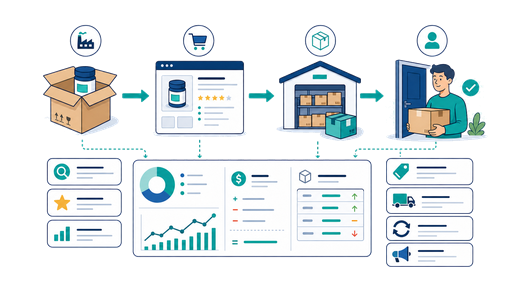
Key stats
Platform rules are a cost
Marketplace sellers need to price for fulfilment, advertising, returns, storage and policy changes rather than treating online reach as free demand.
Source: Amazon Seller Central
Cash flow comes first
E-commerce can grow sales while consuming cash through inventory buys, ad spend and delayed payouts.
Source: SBA
Consumer law still applies
Online sellers still need clear claims, returns handling and truthful pricing.
Source: ACCC
Key concepts
Philadelphia makes it possible to start lean, but that does not excuse random catalog expansion. Focus on products with clear search intent, manageable dimensions and supplier terms you can actually support from your chosen storage setup.
If the business depends on oversize stock, fragile items or frequent returns, the supposed affordability advantage versus New York disappears quickly. Prove the category with a tight opening range before paying for more space.
The model should include prep, packing, relabeling, customer messages and replacement handling, even if the owner is doing it alone at first. Small workflow failures compound once orders begin coming in daily.
If you plan to hire help, include payroll administration, the Philadelphia city wage tax impact and supervision time in the assumptions. A warehouse fantasy is not a business plan.
Audience and industry
Customers for a Amazon online store in Philadelphia should be described by routine, not by broad demographics. Identify who buys, when they buy, how often they return, what alternatives they compare, and how far they will travel. For this business, the first demand hypothesis to prove is search demand, product-market fit and review trust.
Philadelphia suits operators who want East Coast reach without full New York overhead, but rowhouse storage limits, loading friction and bridge-and-highway logistics still need planning. The strongest setups know exactly where stock sits, how quickly it turns and when extra space or staff would genuinely improve throughput.
Competition in Philadelphia is not just the nearest similar operator. Include substitutes, online options, supermarkets, gyms, marketplaces, delivery platforms, shopping centres, petrol sites, home alternatives and any business that solves the same customer problem. Visit competitors at the same times you expect to trade.
Key factors
Proof of search demand, product-market fit and review trust in the exact Philadelphia catchment.
Rent, outgoings, lease obligations and fit-out spend compared with conservative sales.
catalogue quality, fulfilment choice, customer service and stock discipline
gross margin after fees, ads, returns and stock-outs
Enough cash to survive delays, learning, seasonality and slower repeat-customer growth.
Finance model
Business Model Canvas
Specific Philadelphia customers with repeat need for search demand, product-market fit and review trust.
A Amazon store offer that is easier, faster, more trusted or more local than the alternatives.
Street visibility, local search, referrals, social proof, partnerships, delivery or marketplace channels as appropriate.
Sales driven by search demand, product-market fit and review trust; test price, volume and repeat rate separately.
referral fees, fulfilment fees, advertising, returns and landed product cost; split fixed costs, variable costs and launch costs.
catalogue quality, fulfilment choice, customer service and stock discipline
A suitable site or channel, trained people, reliable suppliers, systems, permits and enough runway.
Landlord, suppliers, advisers, local marketers, delivery or fulfilment providers, and maintenance support.
Evidence-based assumptions, staged spending, conservative break-even checks and clear exit conditions.
Common mistakes
Using revenue growth as proof of viability
Measure contribution per order after fees, freight, storage, returns and owner time before scaling inventory.
Letting stock take over whatever room is available
Forecast turn rates and replenishment needs before moving into larger space or buying deeper runs.
Ignoring operational admin
Model listing upkeep, customer service and supplier chasing as part of weekly labor, not spare-time cleanup.
Case studies
A compact scenario showing how one assumption can change the result.
A compact scenario showing how one assumption can change the result.
Decision tree
Move to rent, capacity and margin stress tests.
Keep researching, pre-selling or testing with a smaller commitment.
Review startup risk, funding and compliance with advisers.
Renegotiate rent, reduce scope, change location or pause.
Prepare a launch plan with measured weekly review points.
Fix capacity, staffing, supplier or process constraints before spending more.
Self-evaluation
Early stage: tighten the assumptions before treating this as feasible.
Decision point
Use the simulator as a structured sanity check. It should support adviser conversations, not replace them.
Test your idea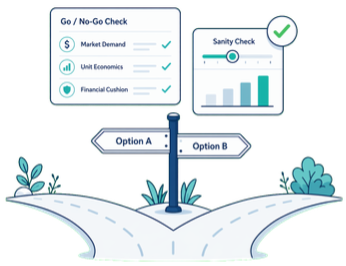
Where you trade
The guide above works as a planning framework. Confirm the rules, taxes and local context below before you commit.

Checklist
FAQ
It can if you want lower fixed costs while staying close to dense Northeast markets. The better city is the one whose space, freight and workflow assumptions still leave room after fees and returns.
Not necessarily. Many operators begin from a home workspace or small flex unit, but the model should show where stock will sit, how it will be packed and how returns will be processed.
Test whether a focused opening range can survive supplier cost, marketplace fees, advertising and ordinary return levels before adding more SKUs.
No. It is early planning support to help you structure assumptions before seeking qualified advice on finance, tax, lease, employment and compliance matters.
Sources
Disclaimer: smallbizsim.com provides indicative planning estimates only. It is not financial, legal, tax or investment advice. Verify assumptions with qualified advisers before making decisions.