Inventory is cash on shelves
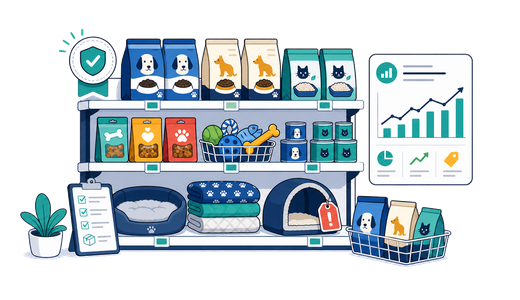
Retail feasibility is shaped by stock turn, shrinkage, markdowns and the money tied up before items sell.
Source: ATO
Business guides
Brisbane rewards Pet Store that feels easy, approachable and well-suited to suburban shopping patterns. Pet owners buy repeatedly for food, litter, treats, toys and care basics, with occasional jumps for higher-value purchases. Customer flow often follows car trips, school runs, weekend outings and visitor clusters rather than dense walkable grids.
Overview
Pet owners buy repeatedly for food, litter, treats, toys and care basics, with occasional jumps for higher-value purchases. Customer flow often follows car trips, school runs, weekend outings and visitor clusters rather than dense walkable grids. The city is expanding, but the store needs trust, practical range and perhaps a service edge, because price comparison is easy on common items. A good suburban fit often beats chasing prestige for its own sake. South Bank brings tourists, Fortitude Valley can be trend-driven, and growth corridors like North Lakes or Springfield are useful for family convenience trade. The guide should highlight where daily dog-walking culture, apartment pet ownership or family suburbs support repeat purchases.
Key stats
Inventory is cash on shelves
Retail feasibility is shaped by stock turn, shrinkage, markdowns and the money tied up before items sell.
Source: ATO
Consumer law follows the sale
Returns, guarantees, product claims and pricing practices need to be built into store operations from day one.
Source: ACCC
Foot traffic is not demand
Retail guides and landlords talk about exposure, but feasibility depends on the share of passers-by who stop, buy and return.
Source: business.gov.au
Key concepts
South Bank brings tourists, Fortitude Valley can be trend-driven, and growth corridors like North Lakes or Springfield are useful for family convenience trade. The guide should highlight where daily dog-walking culture, apartment pet ownership or family suburbs support repeat purchases. Use that Brisbane context to test how neighbourhoods with repeat pet spend behaves in the exact street, centre or corridor you are considering rather than treating the city as one market.
The city is expanding, but the store needs trust, practical range and perhaps a service edge, because price comparison is easy on common items. A good suburban fit often beats chasing prestige for its own sake. Founders should use local observation, lease reality and competitor mapping to see whether the site really supports this part of the model.
Food, accessories and premium add-ons should be modelled explicitly so the forecast shows what happens when staffing, stock, service speed or utilisation is only average rather than ideal.
Tell founders to build the concept around repeat consumables first, then layer in premium discretionary categories. Keep the assumptions conservative enough that the business still makes sense outside opening-week optimism.
Audience and industry
Customers for a pet supplies store in Brisbane should be described by routine, not by broad demographics. Identify who buys, when they buy, how often they return, what alternatives they compare, and how far they will travel. For this business, the first demand hypothesis to prove is repeat food purchases, treats, accessories, grooming and local pet-owner loyalty.
Brisbane customers in this category are typically dog and cat owners, new pet parents, treat-and-toy impulse buyers and locals seeking advice on everyday care. Category mix, stock depth and local shopping patterns matter because generic range planning can trap cash quickly.
Competition in Brisbane is not just the nearest similar operator. Include substitutes, online options, supermarkets, gyms, marketplaces, delivery platforms, shopping centres, petrol sites, home alternatives and any business that solves the same customer problem. Visit competitors at the same times you expect to trade.
Key factors
Proof of repeat food purchases, treats, accessories, grooming and local pet-owner loyalty in the exact Brisbane catchment.
Rent, outgoings, lease obligations and fit-out spend compared with conservative sales.
range selection, advice, subscriptions, grooming scheduling and stock turns
basket and service margin after stock cost, labour, wastage and freight
Enough cash to survive delays, learning, seasonality and slower repeat-customer growth.
Finance model
Business Model Canvas
Specific Brisbane customers with repeat need for repeat food purchases, treats, accessories, grooming and local pet-owner loyalty.
A pet store offer that is easier, faster, more trusted or more local than the alternatives.
Street visibility, local search, referrals, social proof, partnerships, delivery or marketplace channels as appropriate.
Sales driven by repeat food purchases, treats, accessories, grooming and local pet-owner loyalty; test price, volume and repeat rate separately.
stock, shrinkage, wages, rent, grooming labour, utilities and freight; split fixed costs, variable costs and launch costs.
range selection, advice, subscriptions, grooming scheduling and stock turns
A suitable site or channel, trained people, reliable suppliers, systems, permits and enough runway.
Landlord, suppliers, advisers, local marketers, delivery or fulfilment providers, and maintenance support.
Evidence-based assumptions, staged spending, conservative break-even checks and clear exit conditions.
Common mistakes
Using citywide demand instead of catchment evidence
Validate neighbourhoods with repeat pet spend on the exact site or suburb before assuming Brisbane-wide interest will convert.
Letting the format drift
Choose a clearer operating model around food, accessories and premium add-ons so the site, staffing plan and customer promise all support the same business.
Hiding pressure inside averages
Make online competition and loyalty visible in the assumptions so quiet periods and ordinary weeks are not disguised by best-case peaks.
Case studies
A compact scenario showing how one assumption can change the result.
A compact scenario showing how one assumption can change the result.
Decision tree
Move to rent, capacity and margin stress tests.
Keep researching, pre-selling or testing with a smaller commitment.
Review startup risk, funding and compliance with advisers.
Renegotiate rent, reduce scope, change location or pause.
Prepare a launch plan with measured weekly review points.
Fix capacity, staffing, supplier or process constraints before spending more.
Self-evaluation
Early stage: tighten the assumptions before treating this as feasible.
Decision point
Use the simulator as a structured sanity check. It should support adviser conversations, not replace them.
Test your idea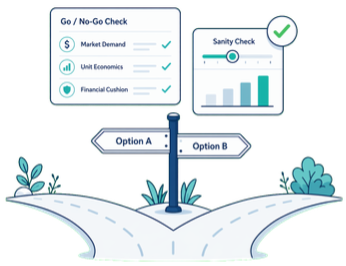
Where you trade
The guide above works as a planning framework. Confirm the rules, taxes and local context below before you commit.

Checklist
FAQ
South Bank brings tourists, Fortitude Valley can be trend-driven, and growth corridors like North Lakes or Springfield are useful for family convenience trade. The guide should highlight where daily dog-walking culture, apartment pet ownership or family suburbs support repeat purchases. Use those precinct cues as starting points, then verify the exact street, centre or neighbourhood at the hours your model depends on.
Start with neighbourhoods with repeat pet spend and food, accessories and premium add-ons, then pressure-test them against the exact Brisbane catchment. Those assumptions usually decide whether the concept is convenient, distinctive and repeatable enough.
Check lease and fit-out approvals, signage rules, staffing obligations, insurance, consumer-law basics and any product-specific restrictions before taking on inventory or fixtures.
No. It is early planning support to help you structure assumptions before seeking qualified advice on finance, tax, lease, employment and compliance matters.
Sources
Disclaimer: smallbizsim.com provides indicative planning estimates only. It is not financial, legal, tax or investment advice. Verify assumptions with qualified advisers before making decisions.