Local services win locally
A small service business should validate nearby demand, licences, insurance and the owner’s operating role before buying equipment or fitting out.
Source: business.gov.au
Business guides
A Houston barbershop works when it becomes the haircut people fit into their normal route without thinking, combining dependable grooming with the neighborhood trust that keeps rebooking easy.
Overview
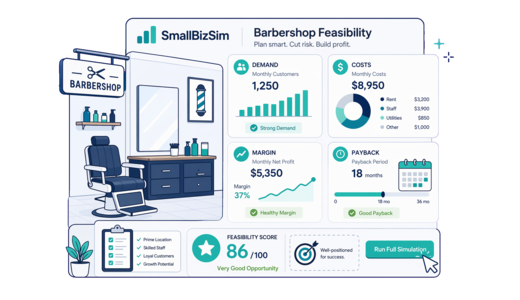
Barbershops fit Houston well because regular male grooming is routine, car-based access matters and community identity still drives loyalty. Midtown, Gulfton and Medical Center-adjacent zones can support worker and renter traffic, while Cypress, Katy and Pearland may reward family-friendly repeat trade, kids’ cuts and easier parking. The key choice is whether the shop leans on walk-ins, appointments or a mix, because that shapes staffing, waiting space and marketing. Use the simulator to test chair productivity, rent, licensing, retail add-ons and owner coverage against realistic repeat frequency.
Key stats
Local services win locally
A small service business should validate nearby demand, licences, insurance and the owner’s operating role before buying equipment or fitting out.
Source: business.gov.au
Small-business churn is real
Business entry and exit data is a reminder to model slow ramp-up, owner wages and a cash buffer instead of only an optimistic launch month.
Source: ABS
Trust is part of the product
Personal services need visible hygiene, transparent pricing and review discipline because reputation compounds faster than advertising.
Source: Professional Beauty Association
Key concepts
A worker-heavy area may need early or late slots and sharper speed, while a suburban family center may depend on weekend bookings and easy parking. In Houston, access and timing often matter more than a fashionable storefront.
Watch competing shops to see whether customers line up, book ahead or mix both. That tells you how much waiting area, staffing flexibility and software discipline the business really needs.
Haircuts are a routine purchase. The shops that last make the next visit obvious through consistent results, respectful timing and a neighborhood atmosphere people want to return to.
Model retail products, no-shows, tips and relief coverage honestly. A full chair on Saturday does not tell you enough about weekday viability.
Audience and industry
Customers for a barbershop in Houston should be described by routine, not by broad demographics. Identify who buys, when they buy, how often they return, what alternatives they compare, and how far they will travel. For this business, the first demand hypothesis to prove is repeat local demand, visible catchment fit and sustainable booking or transaction volume.
Houston is full of haircut options, so a new barbershop usually wins through cultural fit, sharper service rhythm or stronger neighborhood trust rather than through being simply “premium.” The business compounds through routine, not novelty.
Competition in Houston is not just the nearest similar operator. Include substitutes, online options, supermarkets, gyms, marketplaces, delivery platforms, shopping centres, petrol sites, home alternatives and any business that solves the same customer problem. Visit competitors at the same times you expect to trade.
Key factors
Proof of repeat local demand, visible catchment fit and sustainable booking or transaction volume in the exact Houston catchment.
Rent, outgoings, lease obligations and fit-out spend compared with conservative sales.
capacity utilisation, staffing coverage, customer experience, stock or equipment control and repeat sales routines
contribution margin after direct costs, labour pressure and occupancy cost
Enough cash to survive delays, learning, seasonality and slower repeat-customer growth.
Finance model
Business Model Canvas
Specific Houston customers with repeat need for repeat local demand, visible catchment fit and sustainable booking or transaction volume.
A barbershop offer that is easier, faster, more trusted or more local than the alternatives.
Street visibility, local search, referrals, social proof, partnerships, delivery or marketplace channels as appropriate.
Sales driven by repeat local demand, visible catchment fit and sustainable booking or transaction volume; test price, volume and repeat rate separately.
rent, wages, supplies, product cost, utilities, insurance and payment fees; split fixed costs, variable costs and launch costs.
capacity utilisation, staffing coverage, customer experience, stock or equipment control and repeat sales routines
A suitable site or channel, trained people, reliable suppliers, systems, permits and enough runway.
Landlord, suppliers, advisers, local marketers, delivery or fulfilment providers, and maintenance support.
Evidence-based assumptions, staged spending, conservative break-even checks and clear exit conditions.
Common mistakes
Assuming all repeat grooming looks the same
Match service times, pricing and hours to the specific neighborhood routine.
Overrelying on Saturday volume
Build the forecast on what weekday demand can sustain.
Ignoring the booking system
Choose a clear walk-in or appointment logic and make it easy for customers to follow.
Case studies
A compact scenario showing how one assumption can change the result.
A compact scenario showing how one assumption can change the result.
Decision tree
Move to rent, capacity and margin stress tests.
Keep researching, pre-selling or testing with a smaller commitment.
Review startup risk, funding and compliance with advisers.
Renegotiate rent, reduce scope, change location or pause.
Prepare a launch plan with measured weekly review points.
Fix capacity, staffing, supplier or process constraints before spending more.
Self-evaluation
Early stage: tighten the assumptions before treating this as feasible.
Decision point
Use the simulator as a structured sanity check. It should support adviser conversations, not replace them.
Test your idea
Where you trade
The guide above works as a planning framework. Confirm the rules, taxes and local context below before you commit.

Checklist
FAQ
They can work in dense mixed-use areas and family-heavy suburbs alike, but the service rhythm changes. Midtown, Gulfton, Cypress and Pearland may all require different hours, pricing and booking habits.
That depends on the corridor and clientele. Watch local competitors and customer behavior first, then choose the system your team can execute consistently.
Validate chair count, licensing, parking, repeat frequency, staffing coverage and whether the local market values speed, atmosphere or a more relationship-led experience.
No. It is early planning support to help you structure assumptions before seeking qualified advice on finance, tax, lease, employment and compliance matters.
Sources
Disclaimer: smallbizsim.com provides indicative planning estimates only. It is not financial, legal, tax or investment advice. Verify assumptions with qualified advisers before making decisions.