Utilities can decide the model
Equipment-heavy businesses should stress-test power, water, repairs and downtime before trusting revenue projections.
Source: SBA
Business guides
A laundromat in London is a convenience business first. Use the simulator to test whether dense flats, renters, students and limited in-home laundry capacity create enough repeat demand to justify utilities, maintenance, opening hours and the lease better than a cheaper but less convenient site.
Overview
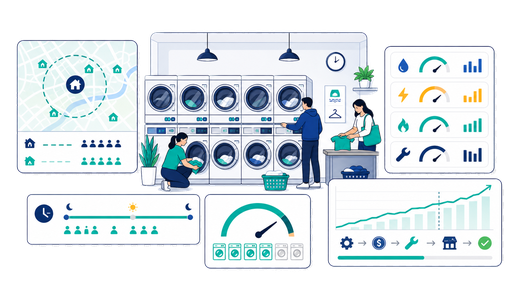
Laundry demand in London is strongest where housing stock and living patterns make in-home washing less easy or less appealing. Dense flats, house shares, student areas and bulky-load households can all support usage, but access and convenience are crucial. Model the business around machine turns, utility exposure, opening-hour practicality and any wash-dry-fold add-on rather than broad city population. That reveals whether the site fits the routine customers actually want.
Key stats
Utilities can decide the model
Equipment-heavy businesses should stress-test power, water, repairs and downtime before trusting revenue projections.
Source: SBA
Capital is locked in early
Fit-out, machinery, lease works and maintenance reserves make staged spending more important than a glossy launch.
Source: business.gov.au
Location still matters
Even semi-automated operations need the right catchment, access, parking and visibility.
Source: SCORE
Key concepts
Dense inner-London housing can be positive when people have limited space or time for laundry, but only if the shop is easy to reach on foot and feels safe at the hours customers need it. Apartment-heavy districts and student areas can be especially relevant.
Parking is less important in some boroughs than short carry distance and simple access. Think carefully about what convenience means in that specific neighbourhood instead of copying a suburban car-led model.
Machines only earn when they are working, clean and available. Build repairs, downtime, detergent supply and utility volatility into the plan rather than treating them as occasional surprises.
Wash-dry-fold can lift revenue, but it also changes labour needs and customer expectations. Keep the self-service and serviced elements distinct in the forecast so the trade-offs stay visible.
Audience and industry
Customers for a laundromat in London should be described by routine, not by broad demographics. Identify who buys, when they buy, how often they return, what alternatives they compare, and how far they will travel. For this business, the first demand hypothesis to prove is renters, apartments, students, travellers and bulky-wash customers.
Laundromats rarely win on glamour. They win by being cleaner, safer, more reliable and easier to use than whatever tired alternative already serves the area.
Competition in London is not just the nearest similar operator. Include substitutes, online options, supermarkets, gyms, marketplaces, delivery platforms, shopping centres, petrol sites, home alternatives and any business that solves the same customer problem. Visit competitors at the same times you expect to trade.
Key factors
Proof of renters, apartments, students, travellers and bulky-wash customers in the exact London catchment.
Rent, outgoings, lease obligations and fit-out spend compared with conservative sales.
machine uptime, safety, cleaning, payment simplicity and opening-hour coverage
cycle revenue after utilities, maintenance, rent and equipment finance
Enough cash to survive delays, learning, seasonality and slower repeat-customer growth.
Finance model
Business Model Canvas
Specific London customers with repeat need for renters, apartments, students, travellers and bulky-wash customers.
A laundromat offer that is easier, faster, more trusted or more local than the alternatives.
Street visibility, local search, referrals, social proof, partnerships, delivery or marketplace channels as appropriate.
Sales driven by renters, apartments, students, travellers and bulky-wash customers; test price, volume and repeat rate separately.
water, gas, power, rent, maintenance, cleaning, insurance and finance repayments; split fixed costs, variable costs and launch costs.
machine uptime, safety, cleaning, payment simplicity and opening-hour coverage
A suitable site or channel, trained people, reliable suppliers, systems, permits and enough runway.
Landlord, suppliers, advisers, local marketers, delivery or fulfilment providers, and maintenance support.
Evidence-based assumptions, staged spending, conservative break-even checks and clear exit conditions.
Common mistakes
Choosing a cheap site that is awkward to use
Prioritise convenient access and local housing fit over rent alone.
Underestimating downtime and repairs
Include maintenance and machine reliability in the core operating plan.
Assuming extra services are free upside
Cost wash-dry-fold labour and workflow separately before adding it to the concept.
Case studies
A compact scenario showing how one assumption can change the result.
A compact scenario showing how one assumption can change the result.
Decision tree
Move to rent, capacity and margin stress tests.
Keep researching, pre-selling or testing with a smaller commitment.
Review startup risk, funding and compliance with advisers.
Renegotiate rent, reduce scope, change location or pause.
Prepare a launch plan with measured weekly review points.
Fix capacity, staffing, supplier or process constraints before spending more.
Self-evaluation
Early stage: tighten the assumptions before treating this as feasible.
Decision point
Use the simulator as a structured sanity check. It should support adviser conversations, not replace them.
Test your idea
Where you trade
The guide above works as a planning framework. Confirm the rules, taxes and local context below before you commit.

Checklist
FAQ
Neighbourhoods with dense flats, renters, students and limited in-home laundry capacity usually create the best demand, provided the store is safe and easy to reach.
It depends on the borough. In many inner areas, short carry distance and walk-up convenience matter more than car access, while outer areas may behave differently.
Only if the labour and workflow make sense. It can lift revenue, but it also changes the operating model and should be tested separately from self-service use.
No. It is early planning support to help you structure assumptions before seeking qualified advice on finance, tax, lease, employment and compliance matters.
Sources
Disclaimer: smallbizsim.com provides indicative planning estimates only. It is not financial, legal, tax or investment advice. Verify assumptions with qualified advisers before making decisions.