Value pressure
Restaurant research keeps pointing to price sensitivity, convenience and memorable experience as the themes operators must design around.
Source: McKinsey
Business guides
A New York juice bar works when the value is obvious enough to turn a health impulse into a repeat habit, not just an occasional cleanse-season splurge.
Overview
Fresh juice bars in New York sit between wellness, convenience and quick-service food. The business only becomes feasible when ingredient spoilage, prep labour, cold storage, packaging and daypart demand are modeled as tightly as the brand voice. A Harlem office edge, Chelsea gym corridor or Flatiron commuter block can each support demand, but the winning menu and hours may differ sharply.
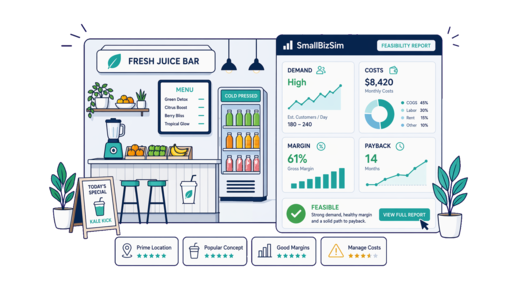
Key stats
Value pressure
Restaurant research keeps pointing to price sensitivity, convenience and memorable experience as the themes operators must design around.
Source: McKinsey
Food safety is not optional
Food businesses need documented food handling, allergen and hygiene processes before launch, not after the first complaint.
Benchmark the margins
Tax-office small-business benchmarks are useful sense checks for food cost, labour and rent assumptions, even though your site still needs its own model.
Source: ATO
Key concepts
A juice bar beside offices needs speed and lunch logic, while one near fitness studios or affluent residential strips may rely more on routine wellness spending and subscriptions. Count where customers are coming from and whether the drink is a commute purchase, a post-class reward or a planned health ritual.
New York weather matters here. Humid summers can create visible peaks, while winter slush and cold winds can shift customers toward warmer or more functional menu choices.
Produce trimming, juice yield, cold storage and unsold bottled stock can quietly reshape margin. Keep those assumptions visible rather than hiding them inside broad food-cost lines.
If bowls, snacks or bottled cleanses are part of the concept, forecast them separately. Extra SKUs only help when they improve basket value without overwhelming prep and refrigeration.
Audience and industry
Customers for a fresh juice bar in New York should be described by routine, not by broad demographics. Identify who buys, when they buy, how often they return, what alternatives they compare, and how far they will travel. For this business, the first demand hypothesis to prove is repeat local demand, visible catchment fit and sustainable booking or transaction volume.
The city gives strong wellness cues, summer refreshment peaks and post-workout routines, yet customers compare juice bars with cafés, smoothie shops, bodegas and meal-prep brands. Operators usually need a clearer habit than “healthy drinks” to justify price and rent.
Competition in New York is not just the nearest similar operator. Include substitutes, online options, supermarkets, gyms, marketplaces, delivery platforms, shopping centres, petrol sites, home alternatives and any business that solves the same customer problem. Visit competitors at the same times you expect to trade.
Key factors
Proof of repeat local demand, visible catchment fit and sustainable booking or transaction volume in the exact New York catchment.
Rent, outgoings, lease obligations and fit-out spend compared with conservative sales.
capacity utilisation, staffing coverage, customer experience, stock or equipment control and repeat sales routines
contribution margin after direct costs, labour pressure and occupancy cost
Enough cash to survive delays, learning, seasonality and slower repeat-customer growth.
Finance model
Business Model Canvas
Specific New York customers with repeat need for repeat local demand, visible catchment fit and sustainable booking or transaction volume.
A fresh juice bar offer that is easier, faster, more trusted or more local than the alternatives.
Street visibility, local search, referrals, social proof, partnerships, delivery or marketplace channels as appropriate.
Sales driven by repeat local demand, visible catchment fit and sustainable booking or transaction volume; test price, volume and repeat rate separately.
rent, wages, supplies, product cost, utilities, insurance and payment fees; split fixed costs, variable costs and launch costs.
capacity utilisation, staffing coverage, customer experience, stock or equipment control and repeat sales routines
A suitable site or channel, trained people, reliable suppliers, systems, permits and enough runway.
Landlord, suppliers, advisers, local marketers, delivery or fulfilment providers, and maintenance support.
Evidence-based assumptions, staged spending, conservative break-even checks and clear exit conditions.
Common mistakes
Assuming wellness branding is enough
Prove a specific repeat habit and show why it beats café or convenience alternatives nearby.
Ignoring produce waste
Model trimming, yield loss, expiry and unsold bottled stock from day one.
Letting the menu sprawl
Add only the products that lift basket value without slowing service or increasing waste beyond control.
Case studies
A compact scenario showing how one assumption can change the result.
A compact scenario showing how one assumption can change the result.
Decision tree
Move to rent, capacity and margin stress tests.
Keep researching, pre-selling or testing with a smaller commitment.
Review startup risk, funding and compliance with advisers.
Renegotiate rent, reduce scope, change location or pause.
Prepare a launch plan with measured weekly review points.
Fix capacity, staffing, supplier or process constraints before spending more.
Self-evaluation
Early stage: tighten the assumptions before treating this as feasible.
Decision point
Use the simulator as a structured sanity check. It should support adviser conversations, not replace them.
Test your idea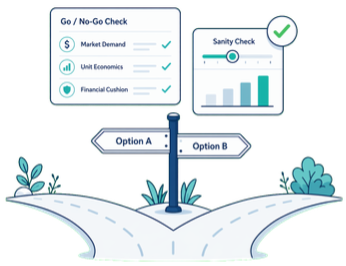
Where you trade
The guide above works as a planning framework. Confirm the rules, taxes and local context below before you commit.

Checklist
FAQ
Where a clear routine exists, such as office lunch resets, commuter grab-and-go, gym adjacency or wellness-heavy residential neighborhoods.
Only if they improve basket value without overwhelming prep, refrigeration or service speed. Model each line separately.
Produce waste, overcomplicated menus, slow service and paying premium rent without enough repeat trade to cover it.
No. It is early planning support to help you structure assumptions before seeking qualified advice on finance, tax, lease, employment and compliance matters.
Sources
Disclaimer: smallbizsim.com provides indicative planning estimates only. It is not financial, legal, tax or investment advice. Verify assumptions with qualified advisers before making decisions.