Inventory is cash on shelves
Retail feasibility is shaped by stock turn, shrinkage, markdowns and the money tied up before items sell.
Source: ATO
Business guides
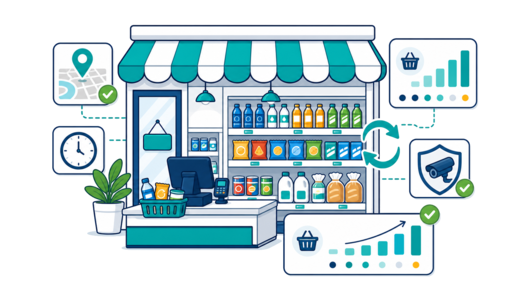
A Philadelphia convenience store works when it becomes the quickest useful stop on a customer's normal route. The simulator should test basket size, stock turns, shrink and staffing against the exact trip mission the block supports.
Overview
Convenience stores in Philadelphia depend on proximity, trust and disciplined inventory control. A store near a SEPTA stop, student corridor or rowhouse neighborhood may all succeed, but only if the range matches what people need in seconds rather than what the owner feels like stocking.
Key stats
Inventory is cash on shelves
Retail feasibility is shaped by stock turn, shrinkage, markdowns and the money tied up before items sell.
Source: ATO
Consumer law follows the sale
Returns, guarantees, product claims and pricing practices need to be built into store operations from day one.
Source: ACCC
Foot traffic is not demand
Retail guides and landlords talk about exposure, but feasibility depends on the share of passers-by who stop, buy and return.
Source: business.gov.au
Key concepts
A University City store may need fast drinks, chargers and student snacks, while South Philly may favor practical staples and neighborhood familiarity. Count what people already carry and what nearby stores fail to provide.
Do not assume that more SKUs means more revenue. A tighter range built around repeat-route shopping often works better than a cluttered assortment with slow turns.
Extended trading hours may be necessary, but they raise labor, utilities and security demands. Model each trading period separately so weak hours are visible rather than hidden inside daily totals.
Lighting, camera placement, counter design and staffing rules affect customer comfort and shrink just as much as the shelf mix does. Operational discipline matters more than novelty retail ideas here.
Audience and industry
Customers for a convenience store in Philadelphia should be described by routine, not by broad demographics. Identify who buys, when they buy, how often they return, what alternatives they compare, and how far they will travel. For this business, the first demand hypothesis to prove is daily repeat errands, commuters, nearby residents and impulse purchases.
Commercial space can be more attainable than New York, yet locals are still price-aware and vocal about weak value or poor safety cues. The best operators understand whether they serve commuters, students, late-night trade or household top-up missions.
Competition in Philadelphia is not just the nearest similar operator. Include substitutes, online options, supermarkets, gyms, marketplaces, delivery platforms, shopping centres, petrol sites, home alternatives and any business that solves the same customer problem. Visit competitors at the same times you expect to trade.
Key factors
Proof of daily repeat errands, commuters, nearby residents and impulse purchases in the exact Philadelphia catchment.
Rent, outgoings, lease obligations and fit-out spend compared with conservative sales.
range discipline, shelf availability, opening hours, security and stock control
basket margin after product cost, wastage, shrinkage and rostered labour
Enough cash to survive delays, learning, seasonality and slower repeat-customer growth.
Finance model
Business Model Canvas
Specific Philadelphia customers with repeat need for daily repeat errands, commuters, nearby residents and impulse purchases.
A convenience store offer that is easier, faster, more trusted or more local than the alternatives.
Street visibility, local search, referrals, social proof, partnerships, delivery or marketplace channels as appropriate.
Sales driven by daily repeat errands, commuters, nearby residents and impulse purchases; test price, volume and repeat rate separately.
stock, shrinkage, wages, rent, utilities, insurance and payment fees; split fixed costs, variable costs and launch costs.
range discipline, shelf availability, opening hours, security and stock control
A suitable site or channel, trained people, reliable suppliers, systems, permits and enough runway.
Landlord, suppliers, advisers, local marketers, delivery or fulfilment providers, and maintenance support.
Evidence-based assumptions, staged spending, conservative break-even checks and clear exit conditions.
Common mistakes
Copying another neighborhood's assortment
Build the mix around your block's route logic, customer profile and obvious category gaps.
Ignoring shrink until after opening
Budget for theft, expiry and damage from day one and design the store around control.
Opening every late hour without proof
Model each time band and close or adjust hours that do not cover labor and utilities.
Case studies
A compact scenario showing how one assumption can change the result.
A compact scenario showing how one assumption can change the result.
Decision tree
Move to rent, capacity and margin stress tests.
Keep researching, pre-selling or testing with a smaller commitment.
Review startup risk, funding and compliance with advisers.
Renegotiate rent, reduce scope, change location or pause.
Prepare a launch plan with measured weekly review points.
Fix capacity, staffing, supplier or process constraints before spending more.
Self-evaluation
Early stage: tighten the assumptions before treating this as feasible.
Decision point
Use the simulator as a structured sanity check. It should support adviser conversations, not replace them.
Test your idea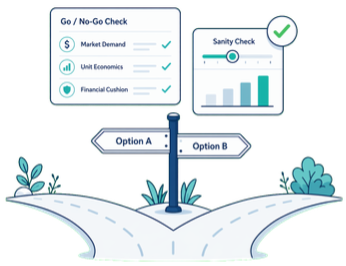
Where you trade
The guide above works as a planning framework. Confirm the rules, taxes and local context below before you commit.

Checklist
FAQ
Start with the local trip mission. A transit corner, student strip and residential block each need a different mix of drinks, snacks, essentials and urgent add-ons.
Not always. Longer hours only help if the extra trade covers labor, utilities and security without creating owner burnout.
Treat shrink as a normal operating assumption, not an exception. The forecast should include theft, expiry, damaged packaging and stock-control errors from the start.
No. It is early planning support to help you structure assumptions before seeking qualified advice on finance, tax, lease, employment and compliance matters.
Sources
Disclaimer: smallbizsim.com provides indicative planning estimates only. It is not financial, legal, tax or investment advice. Verify assumptions with qualified advisers before making decisions.